
Overview
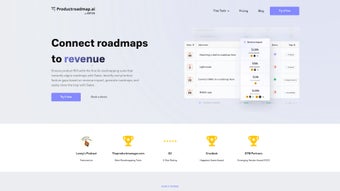
ProductRoadmap.ai ist eine webbasierte, KI‑gestützte Roadmapping‑Suite, die Produktteams dabei hilft, strategische Ideen in umsatzorientierte Umsetzungspläne zu verwandeln. Durch die automatische Analyse von CRM‑Daten deckt die Plattform Deal‑blockierende Feature‑Lücken auf und legt sie direkt in ein priorisiertes Backlog, wodurch jede Roadmap‑Entscheidung an realen Vertriebsergebnissen ausgerichtet ist. Das Tool geht über einen einfachen visuellen Planer hinaus – es verknüpft Produkt-, Marketing‑ und Vertriebsfunktionen durch Echtzeit‑Benachrichtigungen, Monitoring von Wettbewerbs‑Intelligenz und GTM‑(Go‑to‑Market‑)Planungs‑Module. Nutzer können anpassbare Roadmaps erstellen, öffentliche Changelogs veröffentlichen und die integrierte KI Stakeholder‑Feedback zusammenfassen lassen, wodurch die Zeit für manuelle Datenerfassung und Abstimmungs‑Meetings drastisch reduziert wird. Unternehmen, die ProductRoadmap.ai einsetzen, berichten von höheren Feature‑Adoptionsraten, engerer Zusammenarbeit zwischen Vertrieb und Produkt und einem messbaren Anstieg des Return on Investment (ROI), weil die Roadmap zu einem lebendigen, datenbasierten Dokument wird statt zu einer statischen Folienpräsentation. Egal, ob Sie ein SaaS‑Startup sind, das schnell skalieren möchte, oder ein Unternehmen, das die funktionsübergreifende Ausführung straffen will, liefert ProductRoadmap.ai ein sicheres, cloud‑nativen Erlebnis, das kontinuierlich aktualisiert wird, sobald neue Datenströme eintreffen, und Ihre Produktstrategie sowohl agil als auch umsatzzentriert hält. Darüber hinaus unterstützt die Plattform Multi‑Tenant‑Umgebungen, rollenbasierte Zugriffskontrollen und SOC‑2‑Compliance, was sie für regulierte Branchen wie FinTech und Health‑Tech geeignet macht. Die Kombination aus KI‑Erkenntnissen, kollaborativen Arbeitsbereichen und robuster Sicherheit bedeutet, dass Sie der Roadmap vertrauen können, sowohl strategische Ausrichtung als auch messbare Geschäftsergebnisse zu treiben.
Key Features that Differentiate ProductRoadmap.ai
- AI‑Powered Deal‑Blocking Gap Detection: Connects directly to your CRM (Salesforce, HubSpot, Pipedrive, etc.) and uses natural‑language processing to surface feature requests that are preventing deals from closing.
- Automated Prioritisation Engine: Scores each gap against revenue potential, effort, and strategic alignment, then auto‑populates your idea backlog.
- Customisable Roadmap Views: Drag‑and‑drop Gantt‑style timelines, Kanban boards, and timeline heatmaps that can be filtered by product line, market segment, or sales region.
- Competitive Intelligence Monitoring: Continuously crawls competitor releases, pricing changes, and feature announcements, feeding insights directly into the roadmap.
- GTM Planning Suite: Built‑in templates for launch checklists, go‑to‑market calendars, and marketing asset coordination.
- Real‑Time Sales Notifications: When a high‑impact feature is released, the platform pushes alerts to sales reps via email, Slack, or in‑app messages, ensuring they have the latest talking points.
- Public Changelog & Customer Portal: Publish a transparent changelog that customers can subscribe to, improving trust and reducing support tickets.
- AI Feedback Summarisation: Aggregates user feedback from surveys, support tickets, and social media, then summarises key themes for product managers.
- Automation of Internal Processes: Workflow automations for idea approval, budget allocation, and release sign‑off reduce manual hand‑offs.
- Secure Cloud Architecture: End‑to‑end encryption, SOC‑2 compliance, and role‑based access controls keep your strategic data safe.
Each of these capabilities is designed to eliminate the silos that traditionally plague product development. By turning raw CRM data into actionable roadmap items, ProductRoadmap.ai ensures that the features you build are directly tied to revenue outcomes. The competitive intelligence module gives product leaders a proactive edge, letting them anticipate market shifts before they become threats. Meanwhile, the GTM planning tools keep marketing and sales teams aligned with product releases, reducing time‑to‑market and increasing the chances of a successful launch. The platform also offers deep integration with popular development tools such as Jira, Azure DevOps, and GitHub, enabling seamless hand‑off from roadmap to sprint planning. Because the AI engine continuously learns from new data, the prioritisation scores become more accurate over time, helping executives make data‑driven investment decisions. In short, ProductRoadmap.ai combines AI‑driven insights, real‑time collaboration, and enterprise‑grade security to provide a truly end‑to‑end solution for modern product organisations.
Installation, Setup & Daily Usage Guide
Getting Started – No Download Required
Because ProductRoadmap.ai is a SaaS platform, there is no traditional installer to download. New users simply sign up at productroadmap.ai using an email address or single‑sign‑on (SSO) via Azure AD, Okta, or Google Workspace. After confirming the account, you’ll be taken to the onboarding wizard, which walks you through three critical steps: connecting your CRM, defining product lines, and inviting cross‑functional stakeholders. The wizard also includes a quick “roadmap health check” that assesses data quality and suggests initial AI training parameters.
Connecting Your CRM – The Core Integration
In the Integrations tab, select your CRM from the supported list (Salesforce, HubSpot, Pipedrive, Zoho CRM, Microsoft Dynamics). Follow the OAuth flow to grant read‑only access to opportunities, contacts, and custom fields. Once connected, the AI engine begins streaming historical deal data, identifying any feature requests that appear in the “Deal Notes” or “Opportunity Stage” fields. You can fine‑tune the detection rules by mapping custom fields to the “Feature Gap” tag, ensuring that niche terminology used by your sales team is recognised. For organisations with multiple CRM instances, the platform supports parallel connections, merging insights into a unified backlog.
Creating Your First Roadmap
After the data import completes (usually within 10‑15 minutes for mid‑size organisations), click New Roadmap. Choose a template – “Revenue‑Focused”, “Innovation‑First”, or “Balanced”. The AI will automatically suggest high‑impact items based on the gap analysis, complete with estimated effort, potential ARR uplift, and suggested release windows. Drag items onto the timeline, assign owners, and set dependencies. The platform also allows you to attach supporting documents, mock‑ups, or user‑story links from Confluence, Jira, or GitHub. For larger teams, you can enable “roadmap hierarchy” to group initiatives under strategic themes.
Daily Workflow for Product Teams
Product managers typically spend 15‑20 minutes each morning reviewing the Dashboard. The AI‑generated “Hot Gaps” widget highlights any new deal‑blocking requests that have entered the CRM overnight. From there, they can approve, reject, or move items to the idea backlog. Sales leaders receive a daily digest that surfaces which upcoming features are likely to close the most deals, enabling them to tailor outreach scripts. Marketing can pull the latest roadmap view into their campaign planning tools via a public embed link, ensuring all external communication stays in sync. The platform also includes a “what‑if” simulator that lets stakeholders model revenue impact of different prioritisation scenarios.
Maintenance & Updates
Because the service is continuously hosted, updates are rolled out automatically. New AI models, UI enhancements, and integration additions are deployed without any downtime. Administrators receive an email summary of each release, and a changelog is published in the Public Changelog section for transparency. For organisations with strict compliance requirements, a “Release Freeze” option allows you to lock the roadmap during audit periods, preventing accidental modifications. Ongoing support includes a dedicated success manager for enterprise plans, who can help fine‑tune AI parameters and run quarterly health workshops.
ProductRoadmap.ai runs in any modern web browser on Windows, macOS, Linux, iOS, and Android – making it truly cross‑platform.
Pros, Cons, Frequently Asked Questions & Final Verdict
Pros
- AI‑driven identification of revenue‑blocking feature gaps directly from CRM data.
- Seamless cross‑functional collaboration with real‑time notifications for sales and marketing.
- Highly customisable roadmap views and export options (PDF, CSV, embed).
- Integrated competitive intelligence keeps product strategy forward‑looking.
- Secure, SOC‑2 compliant cloud hosting with granular role‑based permissions.
- No local installation required – instant access from any browser.
- Automatic AI summarisation of user feedback reduces manual analysis.
- Public changelog and customer portal improve transparency and reduce support tickets.
- Two‑way sync with Jira, Azure DevOps, Asana, and GitHub accelerates development hand‑off.
- Free 14‑day trial with full feature access lowers entry barriers.
Cons
- Initial AI training may require a few weeks of CRM data to reach optimal accuracy.
- Pricing tiers are based on the number of active users and CRM records, which can be costly for very large enterprises.
- Advanced custom integrations (e.g., proprietary ERP systems) need developer assistance.
- Learning curve for non‑technical stakeholders unfamiliar with roadmap terminology.
- While the UI is intuitive, power users may miss some deeper analytics without additional training.
How does ProductRoadmap.ai extract feature gaps from my CRM?
The platform uses natural‑language processing (NLP) to scan opportunity notes, custom fields, and attached documents within your CRM. It recognises phrases like “missing integration”, “need reporting module”, or “cannot close without X feature”. Detected gaps are then categorised, scored for revenue impact, and automatically added to the idea backlog for review.
Is my data safe when I connect my CRM to ProductRoadmap.ai?
Yes. ProductRoadmap.ai employs end‑to‑end encryption (TLS 1.3) for data in transit and AES‑256 encryption at rest. The service is SOC‑2 Type II certified, and you can enforce IP‑allowlist restrictions and SSO with MFA for added security.
Can I try ProductRoadmap.ai before committing to a subscription?
A 14‑day free trial is available for all plans. During the trial you get full access to all features, including AI gap detection, competitive intelligence, and GTM planning. No credit card is required to start the trial.
Does ProductRoadmap.ai integrate with project‑management tools like Jira or Asana?
Yes. Two‑way sync is supported for Jira, Azure DevOps, Asana, and other major PM tools. When a roadmap item is marked as “Ready for Development”, the corresponding user story or ticket can be automatically created in your chosen PM system, preserving status updates in both platforms.
What kind of support does ProductRoadmap.ai offer?
Customers receive 24/7 email support, a dedicated Slack channel for premium plans, and access to an online knowledge base with step‑by‑step tutorials. Onboarding assistance includes a personalised implementation session and a 30‑day success review.
Conclusion
In today’s fast‑moving product landscape, having a roadmap that is both data‑driven and collaboratively maintained is a decisive advantage. ProductRoadmap.ai delivers exactly that by combining AI‑powered gap detection, automated prioritisation, and real‑time cross‑team communication—all wrapped in an enterprise‑grade security package. While the platform does require an initial data‑learning period and its pricing reflects the depth of functionality, the measurable revenue uplift reported by early adopters makes it a worthwhile investment for organisations serious about aligning product work with financial outcomes. If you are looking for a solution that eliminates guesswork, shortens time‑to‑market, and provides a single source of truth for product strategy, ProductRoadmap.ai is a compelling choice. Start your free trial today and see how AI can transform your roadmap from a static document into a strategic growth engine.



.png)